Spectacles
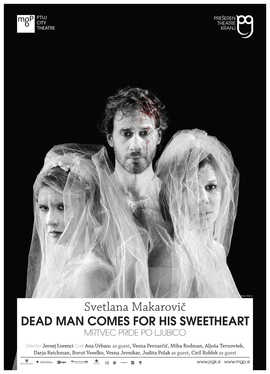
Dead Man comes for his Sweetheart - NETA
by Svetlana Makarovič
Dead Man comes for his Sweetheart - NETA
by Svetlana Makarovič
Premiere: 30.08.2015
Duration: 1 h 50 min / Pause: No
The performance will be presented in the NETA International Theatre Festival by Prešeren Kranj Theatre and Ptuj Theatre from Slovenija.
The show will have subtitles in romanian and english
Micka loved Anzel and Anzel loved Micka. But their love did not have a happy future. It died together with Anzel and Micka was left with a life she doesn’t want, a life that others want to impose on her...
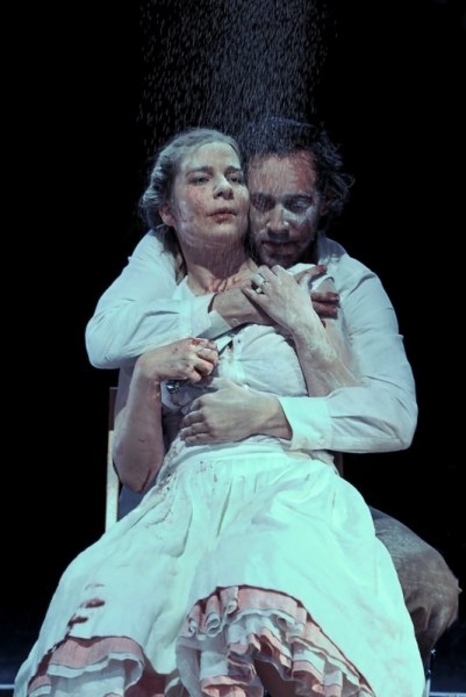
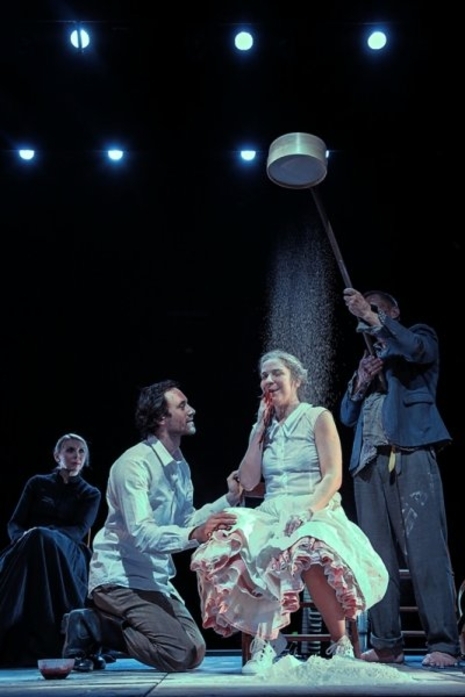
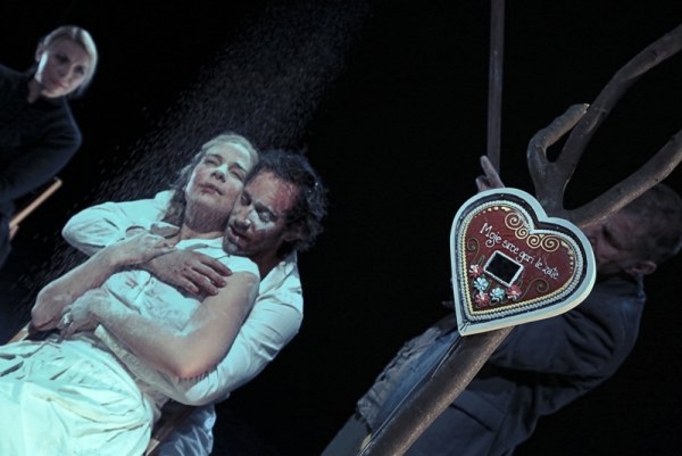
The play Dead Man Comes for His Sweetheart has roots in the eponymous folk song and also in Prešeren’s adaptation of Bürger’s Lenore. The author has approached the topic in a striking and different manner and looked at it from different points of view. By employing schizophrenia she introduces two heroines, two Micka characters, who fight for supremacy or survival. Further, there is also Sveti Tadej, a runner, a seer, a confession-taker. And two mothers. Micka’s and Mlinar’s. None of them was able to escape the sharp pen of Makarovič. Mlinar’s mother, while already dead, scolds her son and gives him instructions how to mourn for her. Because she outmatches him in everything and reminds him that she has sacrificed everything for him, he owes her at least to treat her as she sees fit. Second Micka selfishly ask Mlinar to transfer the ownership of the mill to her, if he wants her to marry him. She says that then she will be able to burn the mill in broad daylight, because it will be hers. Namely, she knows a horrible secret – that Mlinar murdered Anzel, her dead lover. First Micka is gone, because there is no room for true love in such world.
| First Micka: | Ana Urbanc | Second Micka: | Vesna Pernarčič |
| Anzel: | Miha Rodman | Miller: | Aljoša Ternovšek |
| Mother: | Darja Reichman | St. Thaddeus: | Borut Veselko |
| Miller`s dead mother: | Vesna Jevnikar | Judita: | Judita Polak |
| Ciril: | Ciril Roblek |
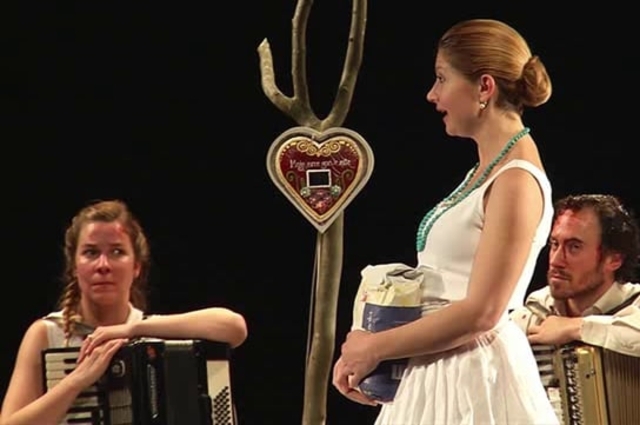
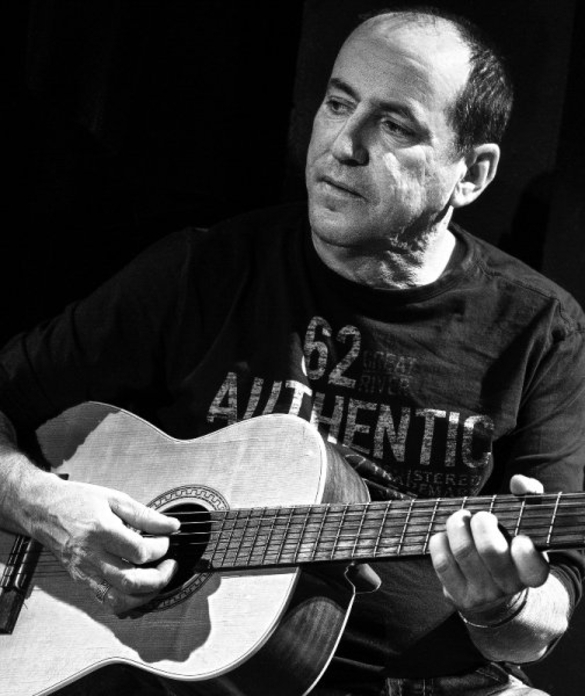
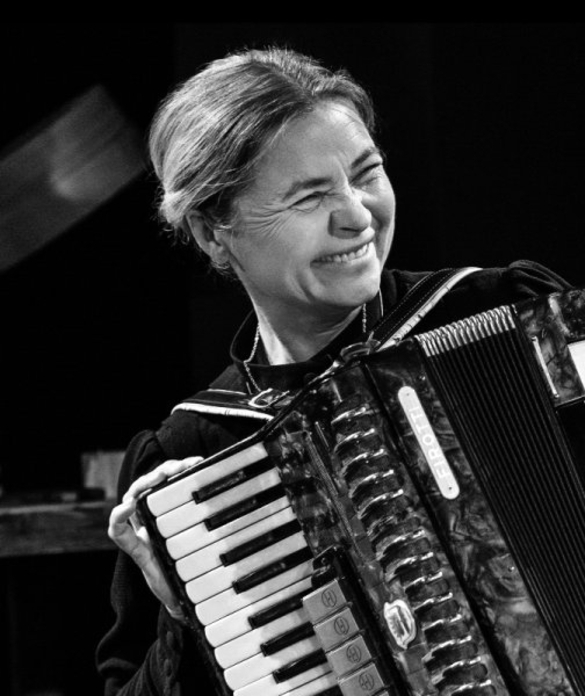
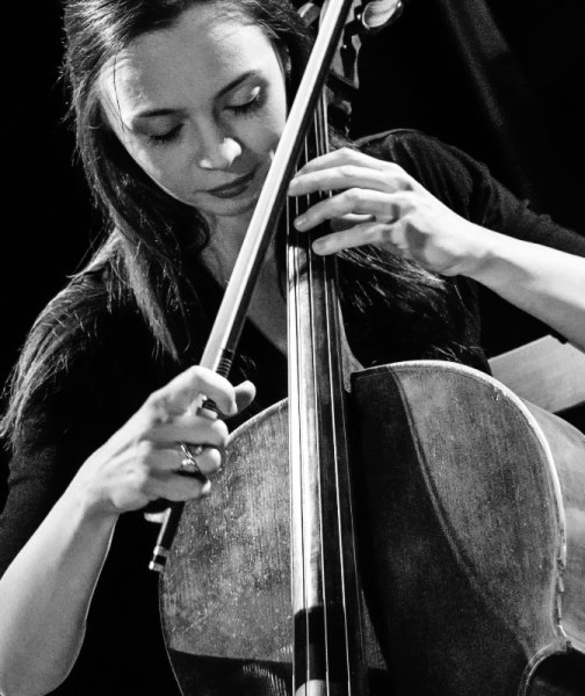
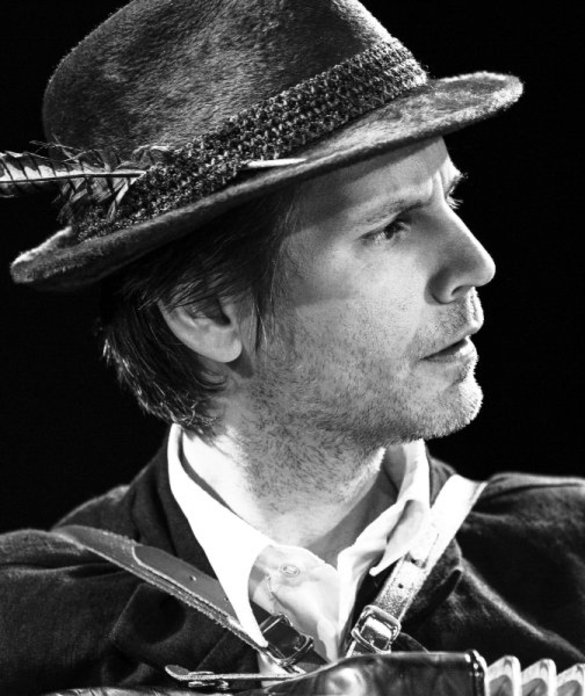
„Dead Man Comes for his Sweatheart” can be described as a victorious harmony between all the elements of the stage arts. The story's leitmotif is addressed methodically, traversing the human need for love and truth to arrive at a social reality of perverted relations, painful family history and women whose place in society is practically stigmatized, in a play characterized by complex and poetical strokes of language. Displaying a pronounced characterization of the protagonists, the staging resembles almost a concert drama where minimalist locomotor interventions are incorporated into pure and immaculate scenes, Accompaniment appears in the form of singing and the accordion, with their own moments of brilliance where music assumes the role of dramatic action in a skilfully crafted dialogue between instruments. The presentation is sharp, the meanings concise and clear. Though written 32 years ago, Dead Man Comes for his Mistress appears entirely modern. The spoken word rings rhythmically through the masterfully segmented dramaturgical scheme, at once shackling the content to the ground and elevating it into the heights. It invites the spectator to open up and face the subconscious, inspiring an inner awakening and a profound sense of enrichment.
Petra Tanko, Radio Slovenia 1, 28 March 2014
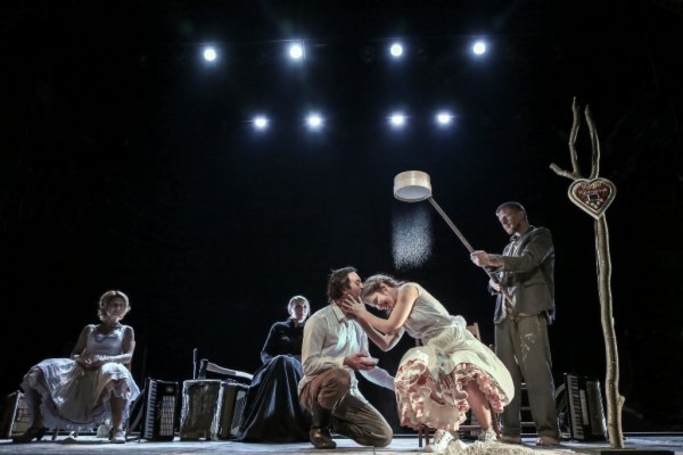
"The story of (disillusioned) love is namely enacted in the constant presence of everyone, with even the most intimate matters taking place in sheer sight of the slanderous and the ignoble onstage, and the entire well-lit theatre hall beyond. Nothing is hidden from envious eyes, the protagonists entering and exiting the play from a sort of inter-space, a row of chairs and somewhat elevated podium on the set.
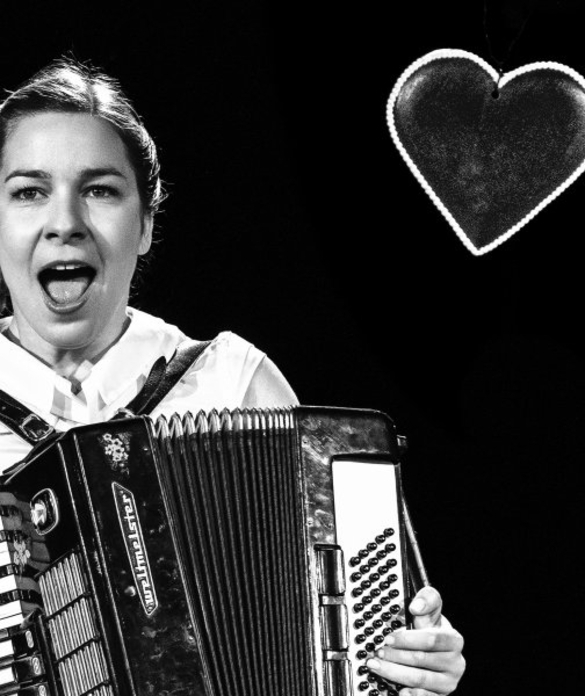
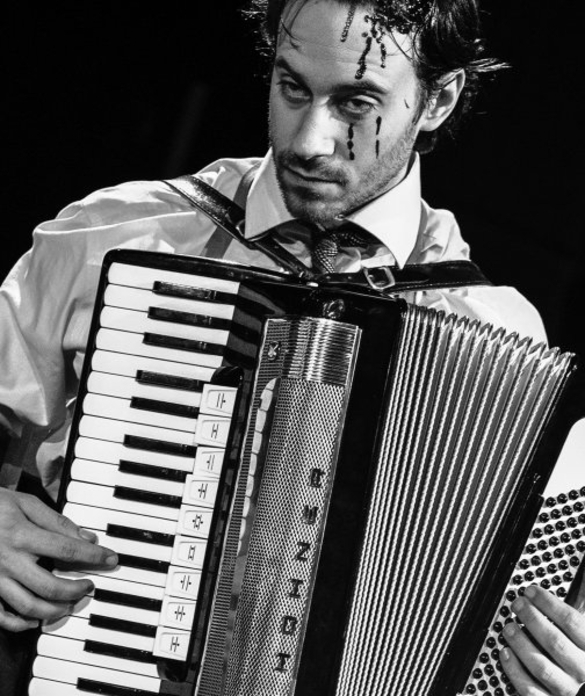
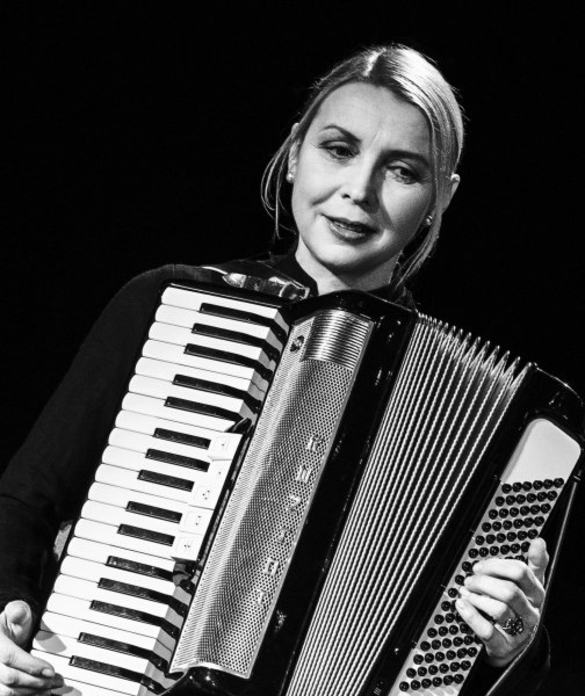
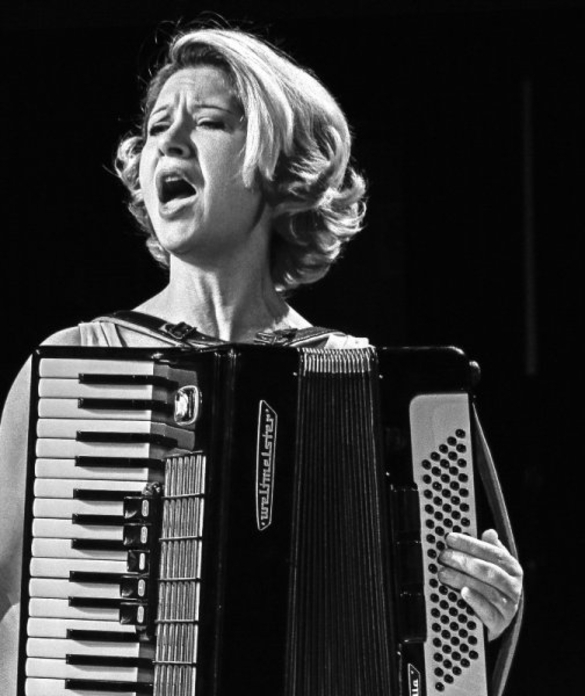
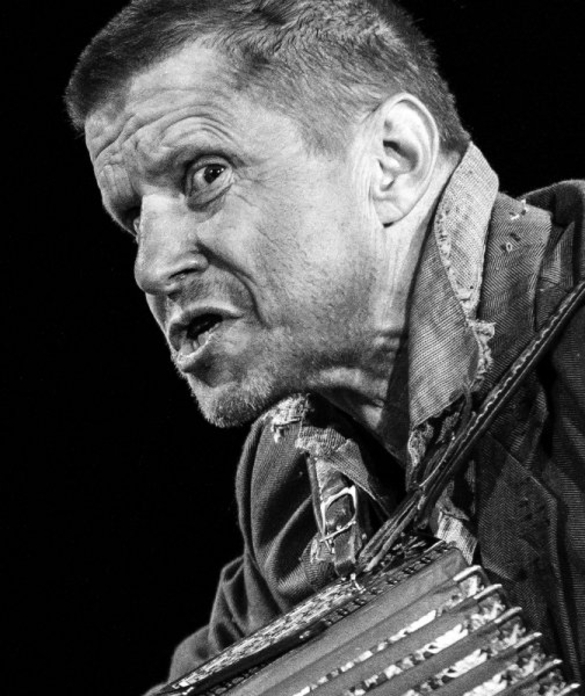
Surrounded by the bare minimum of modest props, the performers mutely express their sniggering remarks using ample and distorted facial gestures, suggestive smirking and conceited grinning. Occasionally, they enter the field playing the accordion, in a musical representation of their duels and retorts.
Lorenci and his team direct the events at a deliberate pace, with interjections of silence and pronounced minimalism supported by an internal intensity. Impressively, they’ve managed to sharpen and tighten the play to its limits: if the original has no tune, if it takes place under desolate skies, this recreation is rife with song and delightfully well-tuned at that". Matej Bogataj