Spectacles
Everyman Ðjilas - NETA
by Radmila Vojvodić

Everyman Ðjilas - NETA
by Radmila Vojvodić
Premiere: 01.09.2015
Duration: 2 h 20 min / Pause: No
The performance will be presented in the NETA International Theatre Festival by Montenegrin National Theatre, Podgorica, Montenegro.
The show will have subtitles in romanian and english
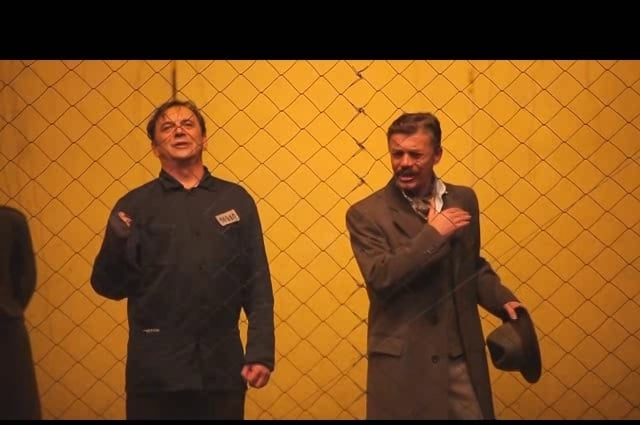
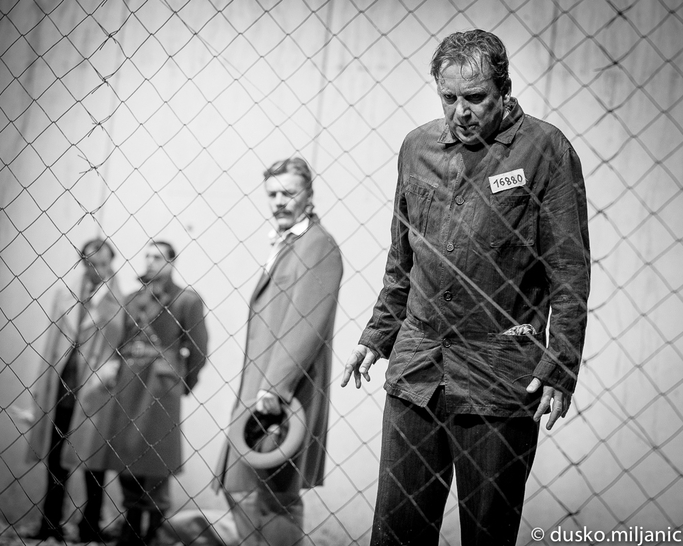
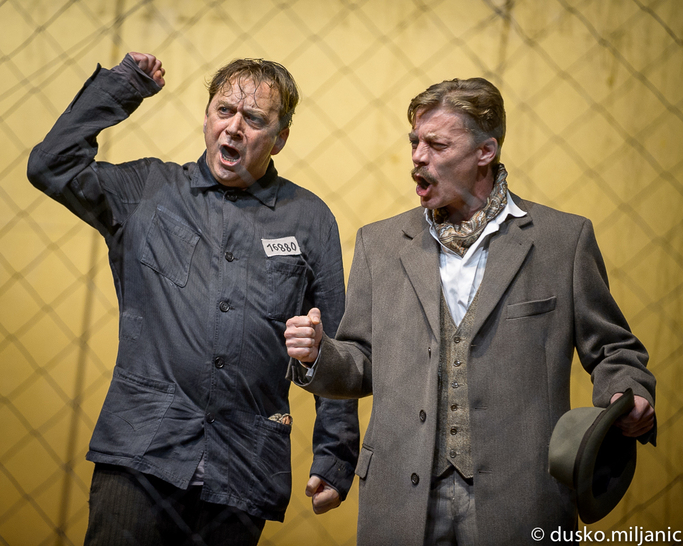
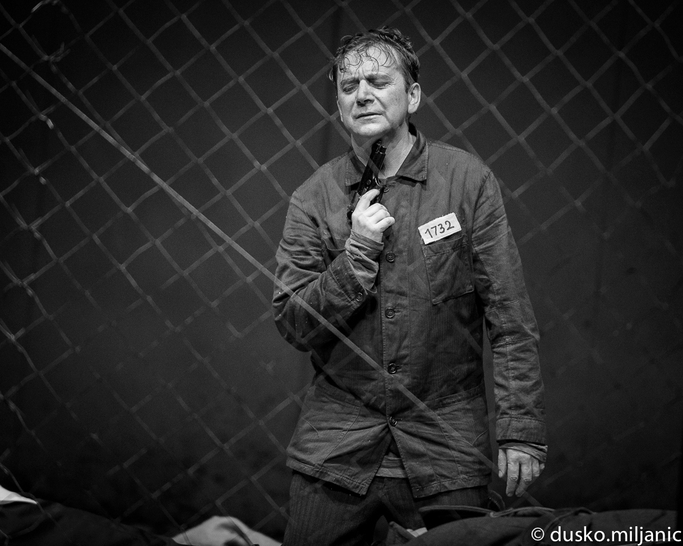
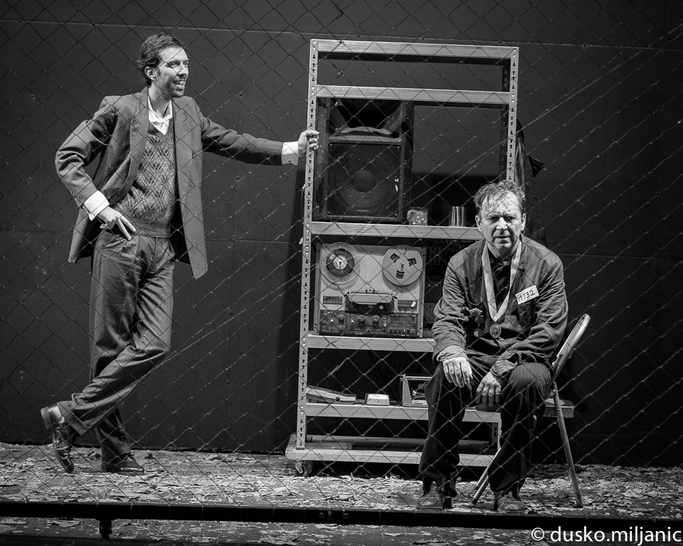
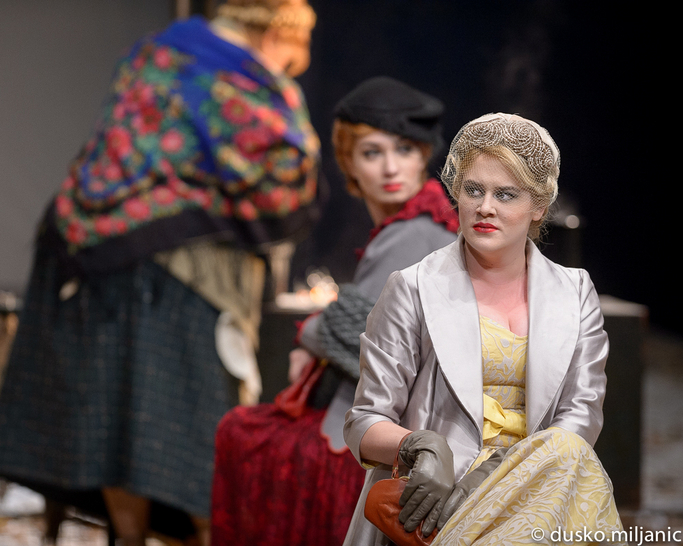
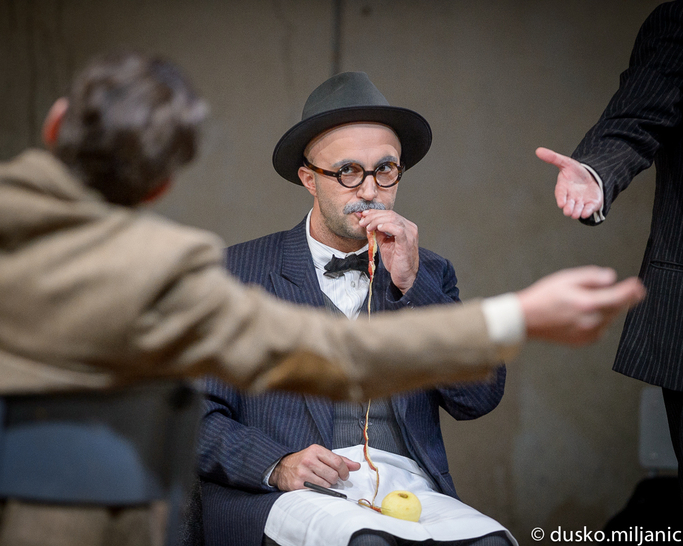
Radmila Vojvodić chose to write the play Everyman Đjilas and to put Milovan Đjilas, a leading figure who put our age to the test and contemplated it, at the center of her interest and engagement. Ms. Vojvodić deals with an era in which its heroes with their actions significantly determined the courses of history of Yugoslavia in its international context. They did it against Nazism also with a full legitimacy and legality of the winners of the Second World War. Everyman Đjilas is a five-act play. Each act represents one fifth of an iceberg above the surface of the sea. Four fifths of meaning and potential are below the surface. This one fifth is made of scenes, climaxes which reveal accumulated, above all political, phenomena which are traumatic and crucial from the dramatic point of view. In her play, Radmila Vojvodić is preoccupied with the nature and consequences of Đilas’ works primarily with Anatomy of a Moral and The New Class, one of the key books of the 20th century; what is no coincidence at all, having in mind the entire contemporary context and more than tempestuous reality at the end of the 20th century and beginning of the 21st century. Just as it is certainly not coincidence that The New Class was listed in the hundred most influential books of the 20th century.
Radmila Vojvodić’s play, as a design, is shown as a documentary; the persons are historical and historically fictional. With the fall of the Berlin Wall a utopia also fell. In this context, the Yugoslavian utopia fell too.What is our utopia, what is the utopia of the modern world, who are its creators and heroes, who are its holders? The play “Everyman Đjilas” is an appeal for possible and impossible, and a call upon our courage, ability and risk to create, to be the creators of our own destiny despite everything. A classical medieval term everyman, morality of Everyman; morality as dramatic genre in Everyman Đjilas is established as call upon morality of modern man, i.e. nowadays, winning freedom is the matter of morality. (Borka Pavićević)
| Đjilas: | Tihomir Stanić | Đjilas’s Wife: | Ana Vučković |
| The Revolutionary : | Jelena Nenezić-Rakočević | The Cautious Wife : | Gorana Marković |
| The Artist : | Karmen Bardak | The Pregnant Wife : | Gordana Mićunović |
| The Russian Woman : | Ljubica Barać – Vujović | Dedijer : | Simo Trebješanin |
| Koča: | Dejan Ivanić | Moša : | Dušan Kovačević |
| Leka : | Nikola Perišić | Comrade Krcun : | Petar Novaković |
| Comrade Kardelj : | Zoran Vujović | Guard: | Miloš Pejović |
| Prisoner: | Aleksandar Radulović | The Unknown : | Slobodan Marunović |
| The Mumbler : | Mišo Obradović | Đjilas’s Mother : | Dragica Tomas |
| Đjilas’s Son : | Milorad Radović | The American Man from the Entourage : | Goran Slavić |
| The American Jazz Singer : | Nada Vukčević |
There’s an interesting moment near the end of the play when Moša Pijade, who doesn’t speak much otherwise, says: “When a new communist revolution starts somewhere... then they can see how difficult it is”. I think this is the key moment, and one we keep coming up against repeatedly. Namely, it’s easy to criticise the new class, it’s easy to criticise the Gulags; it’s easy to criticize Goli otok; it’s easy to criticise all the shortcomings of self-management, which never really was self-management. However, try finding solutions to these problems yourself, and you will see how difficult it is, and Moša Pijade is actually right here... In a way at the end of the play Djilas provides an answer that transports us directly into the future, or rather the present moment. At the end of the play, in a utopian/dystopian America he understands that capitalism, just like communism has serious flaws. He says “Let’s sing The Internationale”. At that moment in a sense the “fourth wall” is broken: I’m seated in the audience and I expect everyone to start singing The Internationale. However, what happens is identical to what happened in 2009 at a large conference on communism at the University of London, with speakers including Žižek, Badiou, Negri, Terry Eagleton – the leading theoretitians of the New Left… At the end of several days’ conference, there was lots of enthusiasm, thousands of people in the auditorium. And at the end of his speech Žižek said: “Let’s sing The Internationale!”. And what happened? Nothing… No one knew the words… something similar happens in this play… The actors mumble unable to remember the words, but Đjilas himself, who has distanced himself from communism, who criticised it, says: “Let’s sing The Internationale”. It is the only thing that can save us… Instead you get silence, mumbling on the stage and a passive audience… A few days ago I heard news about another union protest in Croatia… And what song did they sing? Not The Internationale. (Srećko Horvat)
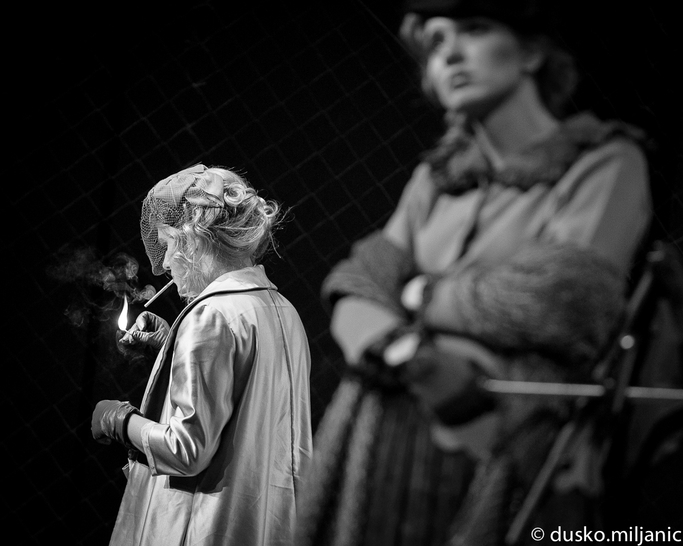
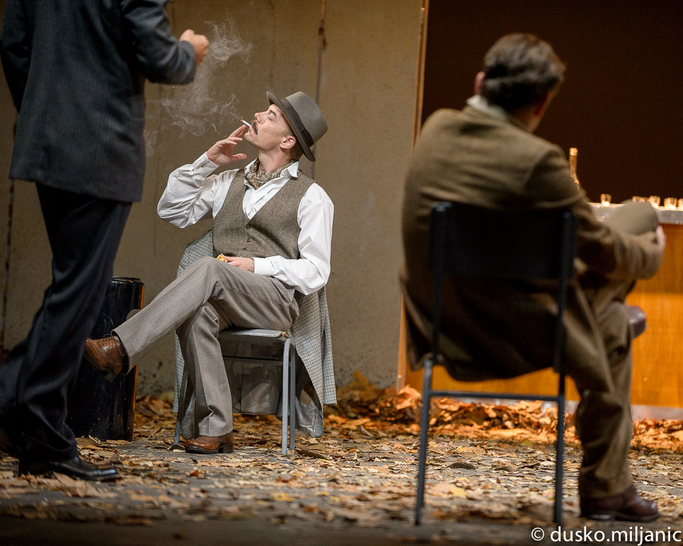
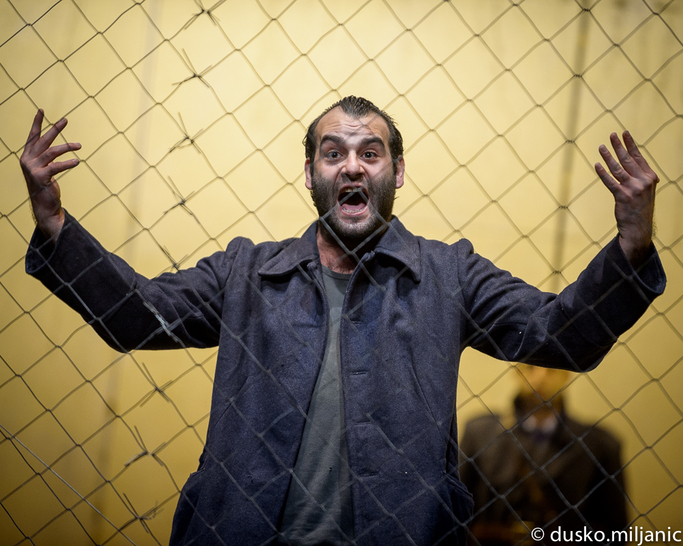
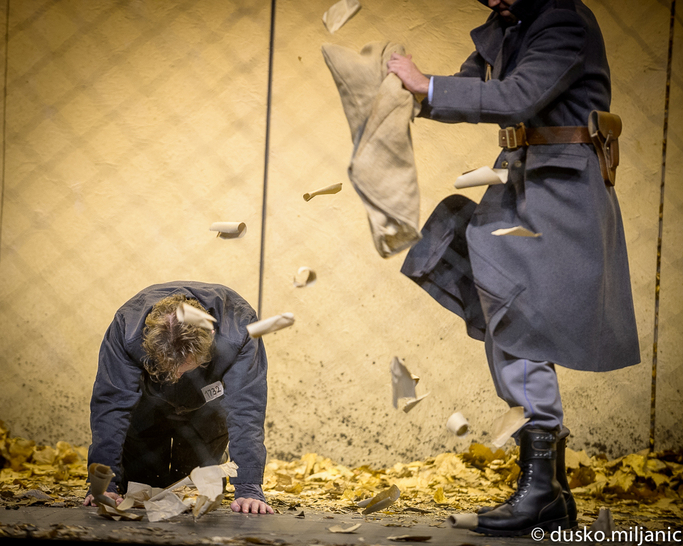
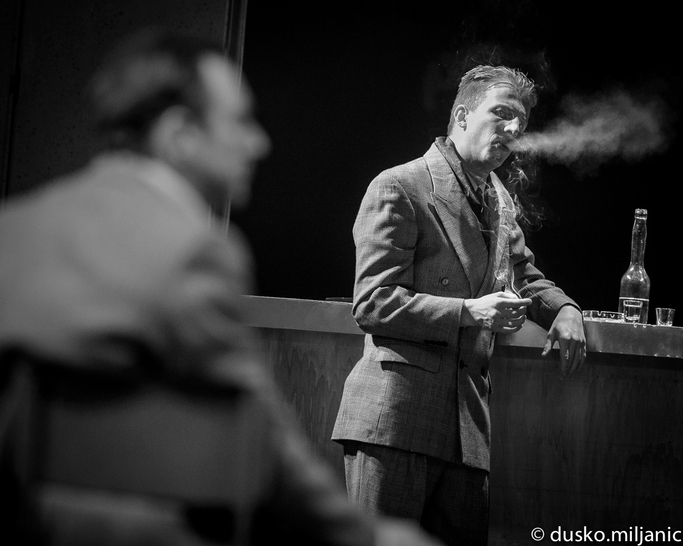
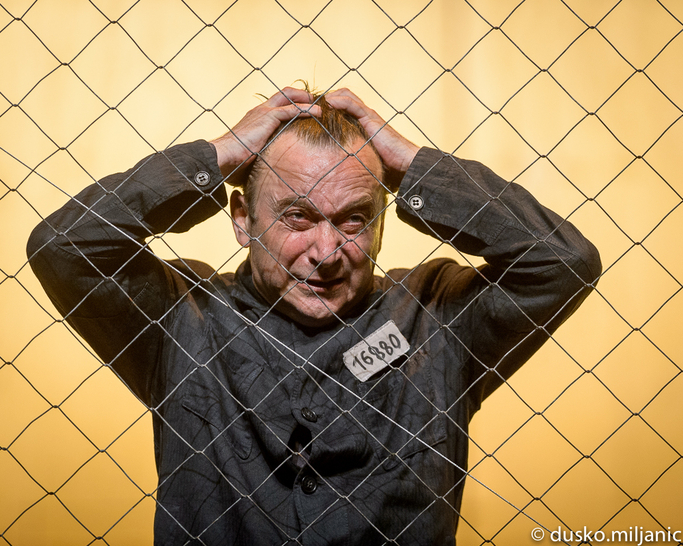
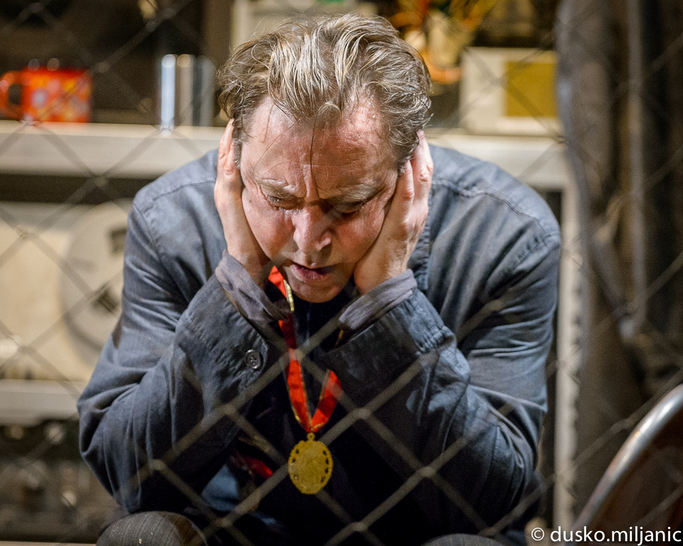
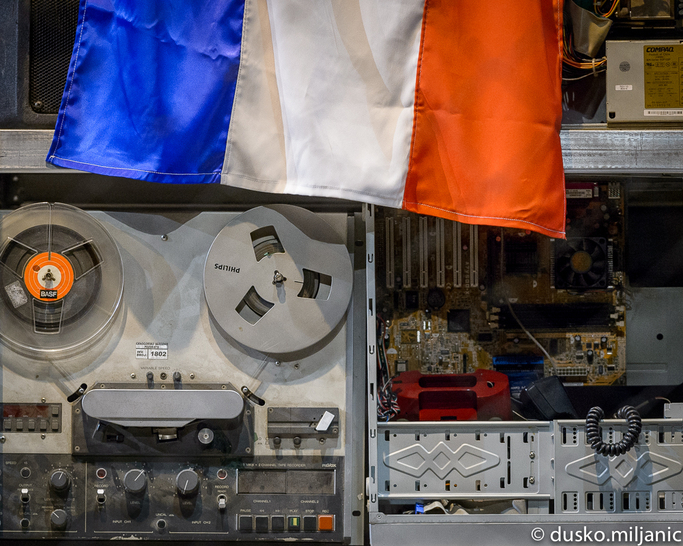
With refined taste, subtly and skilfully, director Radmila Vojvodić moves the plot forward at the analytically reasonable, yet compact rhythm and pace in which the rest of the performance’s segments, such as set, costume design and music, are installed and synchronized. The main feature of this theatrical structure is certainly its purity and stylized form, ranging from acting, mise en scene, all the way to determining the accurate measure for the duration of single sequences or scene images. Within such an organization of the stage act, as a leitmotif it is provided the space for inclusion of viewers as active participants in the play. They are not only witnesses but also the participants of the “Đjilas plenum”. There are, of course, a lot of associations and inclinations to a Brecht’s theatrical style. Epic content is only a starting point for historical act and character which implies actual and contemporary ideas. Finally, the freedom is eternal theme which is even nowadays, and especially nowadays, particularly important, challenging and intriguing. Particularly this production of Montenegrin National Theatre has an impressive style and approach to the theme of man’s self-sacrifice at the altar of freedom and democracy. This is the style of aesthetic lightness and unpretentiousness which provides free "flow" of fresh air and breakthrough of original thoughts and ideas. (Todor Kuzmano)